

An experienced Long Island listing agent helps a homeowner prepare, price, market, and negotiate a home sale while coordinating the many details between listing and closing. The agent’s value is not simply putting the property online. It is building a strategy around the home, the local competition, current buyer demand, and the seller’s goals.
What Does an Experienced Long Island Listing Agent Do?
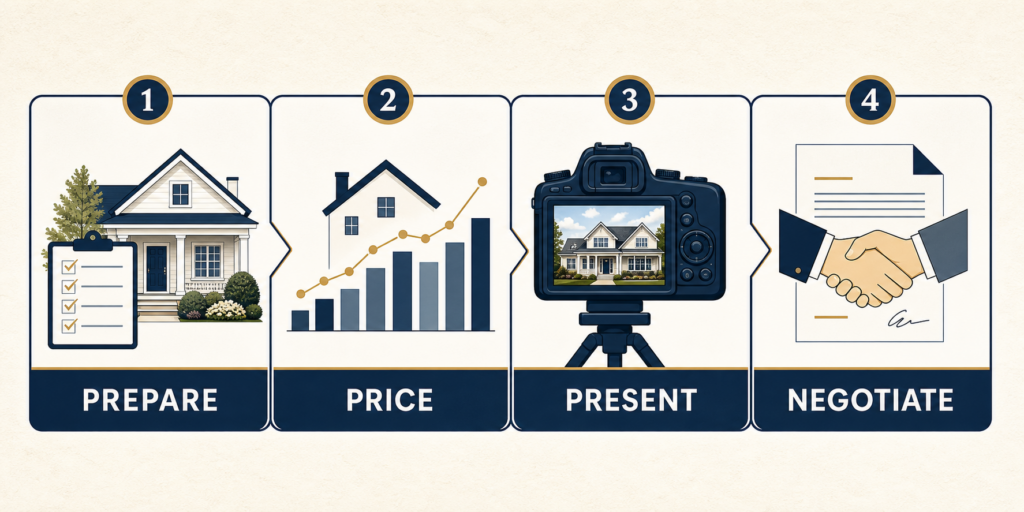
Prepare
Identify the repairs, decluttering, staging, and presentation work most likely to matter to buyers—and avoid improvements that are unlikely to pay off.
Price
Position the home against recent comparable sales, active competition, buyer demand, and the property’s actual strengths and limitations.
Present
Use professional photography, compelling property information, and an effective launch strategy that gives qualified buyers a reason to act.
Negotiate
Compare price, financing, contingencies, appraisal exposure, inspections, timing, and each buyer’s ability to close.
Why Does Local Long Island Experience Matter?
Long Island is not one uniform housing market. Conditions can vary between Nassau and Suffolk Counties, from one community or school district to the next, and sometimes between nearby properties. Taxes, lot size, condition, updates, traffic exposure, proximity to water, municipal records, and competing listings can all affect how buyers evaluate a home.
Local experience also helps a seller anticipate questions involving permits, certificates of occupancy, pools, septic systems, oil tanks, flood exposure, inspections, appraisals, attorney communication, and closing logistics. The goal is to identify important issues early enough to make informed decisions rather than react under pressure later.
How Should a Long Island Home Be Priced?
A strong asking price is based on more than an automated estimate or the amount a nearby home sold for. No two homes are exactly alike. Condition, renovations, layout, taxes, location, lot characteristics, current competition, and buyer demand all influence the likely result.
The right list price should help the property attract qualified attention while protecting the seller’s negotiating position. Pricing too high can cause a home to sit on the market and lose momentum; pricing without understanding current competition can leave the seller reacting to the market instead of leading it.
If you are beginning to consider a sale, start by reviewing what your Long Island home may be worth and the homes buyers will compare with yours.
How Does a Listing Agent Prepare and Market a Home?
Effective marketing begins before the home is photographed. A seller should understand what is worth repairing or improving, what should be cleaned or removed, and how each room will appear both online and in person.
Preparation Plan
Prioritize the work most likely to improve presentation and buyer confidence without spending unnecessarily.
Professional Presentation
Use photography, property descriptions, staging or virtual staging where appropriate, and a clear buyer-focused message.
Launch Strategy
Introduce the home to the market in a way that positions it properly against listings buyers are actively considering.
Timing should also fit the seller’s circumstances, not just a generic rule about the “best” season. Learn more about when to list a Long Island home.
How Should a Seller Compare Multiple Offers?
The highest offer is not automatically the best offer. The strongest offer usually provides the best combination of price, financing strength, appraisal protection, inspection terms, timing, and certainty of closing.
What is the buyer actually offering?
How strong are the approval and down payment?
Are there appraisal, inspection, financing, or sale contingencies?
Does the proposed closing date work for the seller?
What Happens After an Offer Is Accepted?
An accepted offer is an important milestone, but it is not the end of the transaction. Inspections, attorney review, contracts, appraisal concerns, buyer questions, lender requests, title matters, municipal issues, and closing logistics may still need attention.
Personal Guidance From Preparation Through Closing
I have spent more than 25 years helping Long Island buyers and sellers navigate real estate decisions. I work directly with my clients from the first pricing and preparation conversation through negotiation and closing.
Sellers should understand the strategy being recommended, the choices in front of them, and the potential tradeoffs. You can learn more about my Long Island real estate experience or explore additional home-selling resources.
Questions Long Island Home Sellers Often Ask
What does a Long Island listing agent do?
A listing agent helps a seller prepare the property, determine a pricing strategy, market the home, communicate with buyers and their agents, evaluate offers, negotiate terms, and coordinate the transaction through closing.
Do I need a listing agent to sell my Long Island home?
A homeowner can sell without an agent, but should be prepared to handle pricing, preparation, marketing, buyer qualification, showings, negotiations, inspections, appraisals, attorney communication, and closing coordination. An experienced listing agent helps manage those moving parts and protect the seller’s position.
How is a listing agent paid?
Real estate brokerage compensation is negotiable. The services provided, compensation, and other terms should be explained and agreed to in writing before the seller signs a listing agreement.
How should I compare multiple offers on my home?
Look beyond the headline price. Review financing, down payment, appraisal terms, inspections, requested concessions, contingencies, the buyer’s ability to close, and the proposed closing date.
When should I speak with a Long Island listing agent?
It is usually best to begin the conversation before you are ready to list. Early planning gives you time to understand the likely market position, make practical preparation decisions, review timing, and avoid rushed choices.
Thinking About Selling Your Long Island Home?
Before deciding how to price, prepare, or market your property, it helps to understand your current competition, likely buyer demand, and the strategy most likely to support your goals.
Request a Confidential Seller Consultation
Call or text Glen directly:
516-429-9399